TPO Overlay Over EPDM Done Right in Roswell
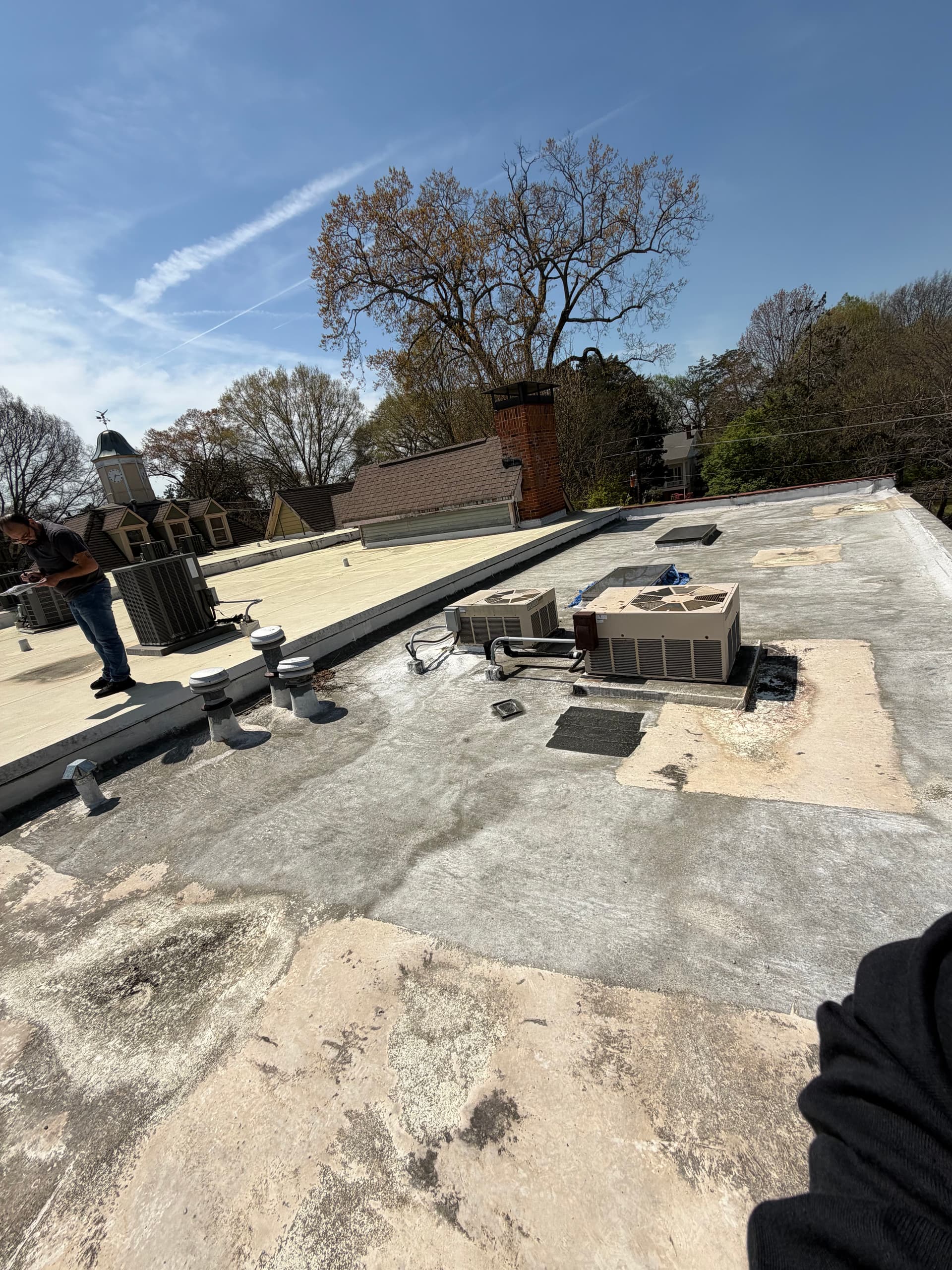
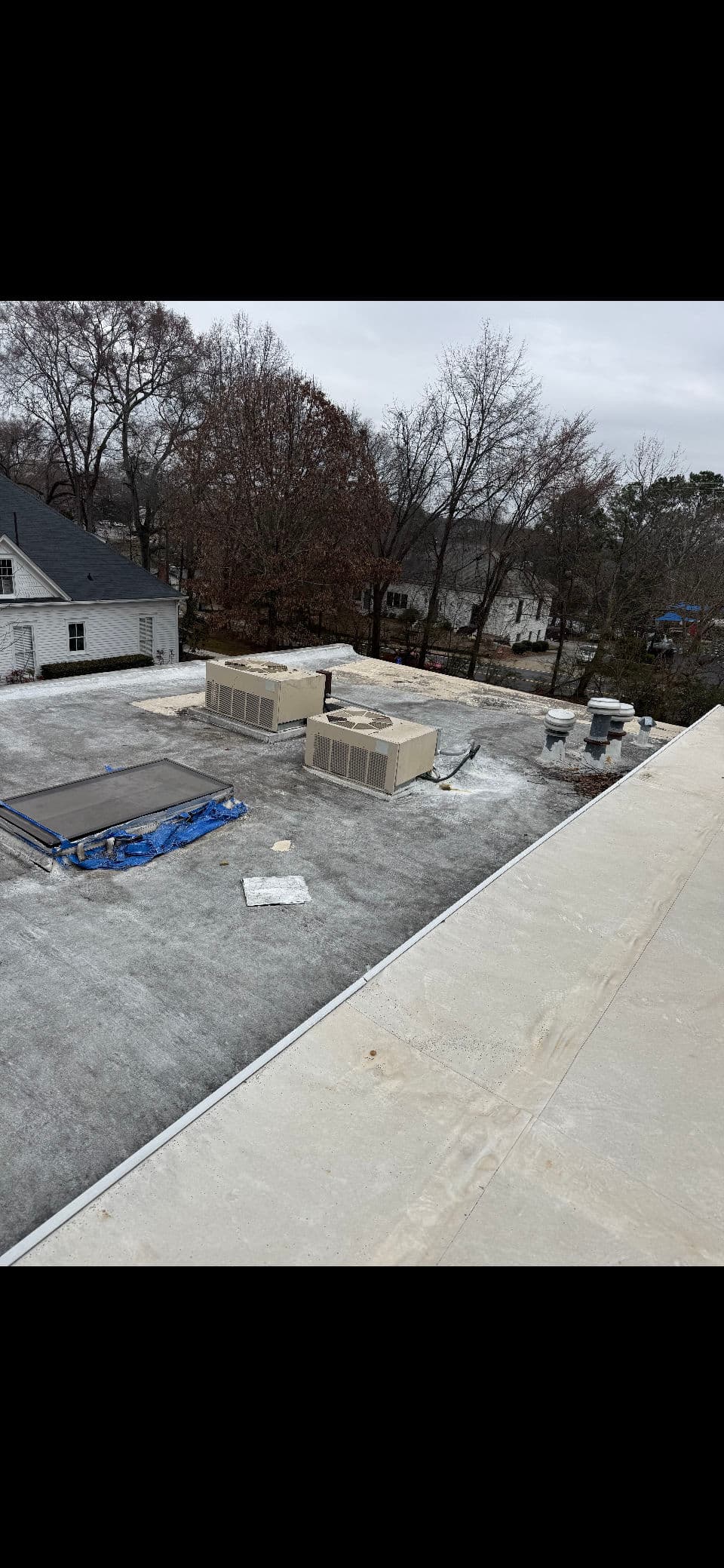
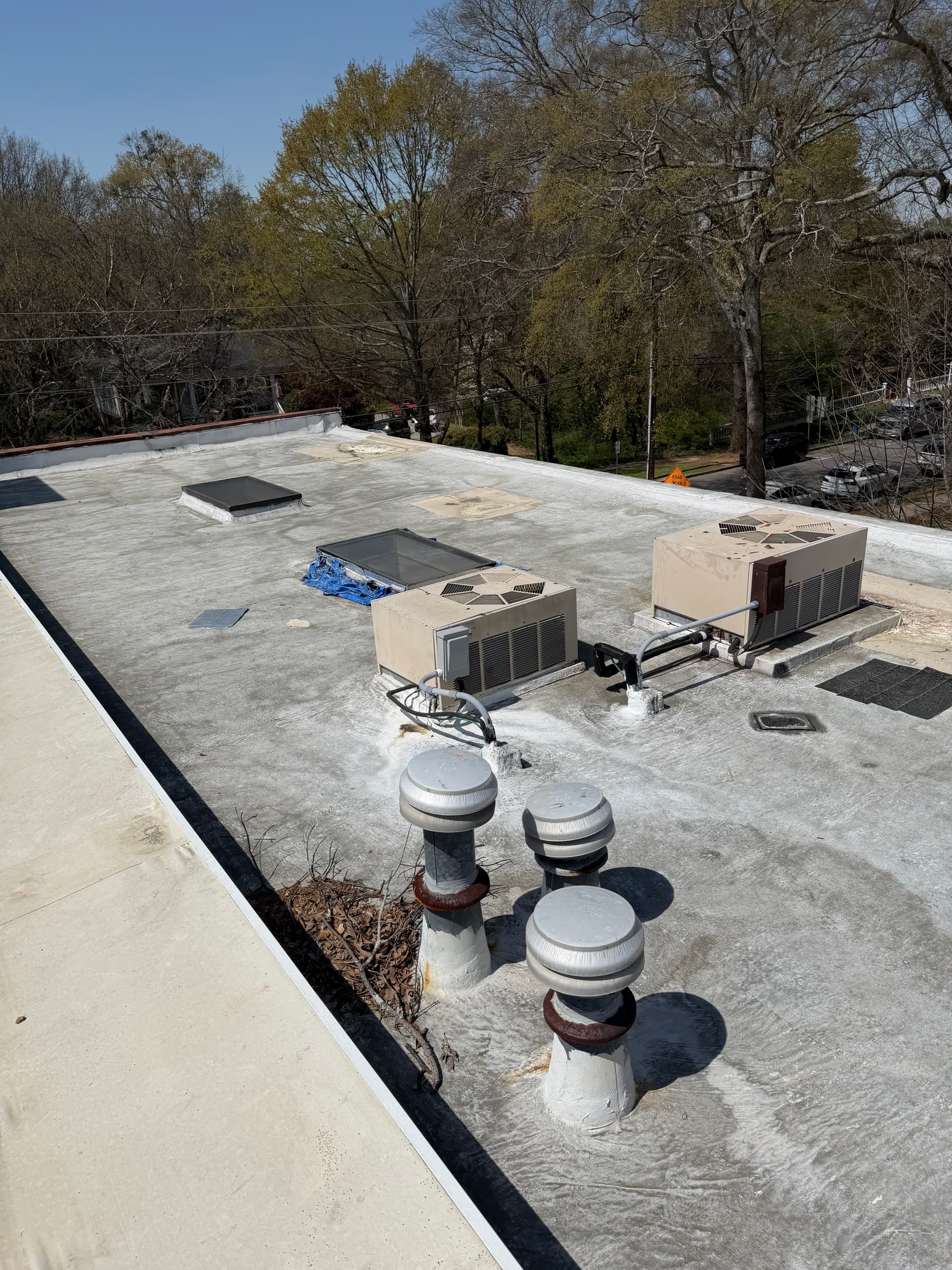
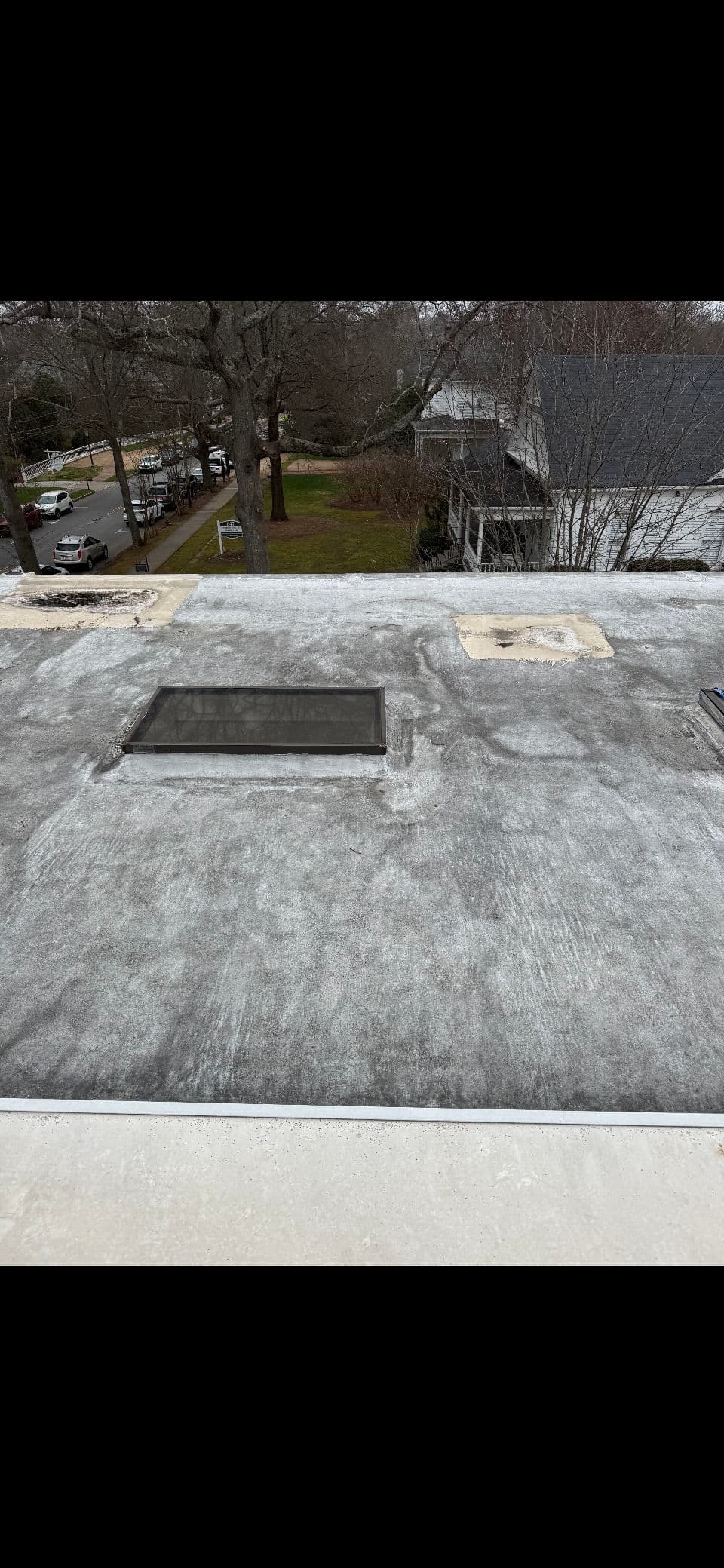
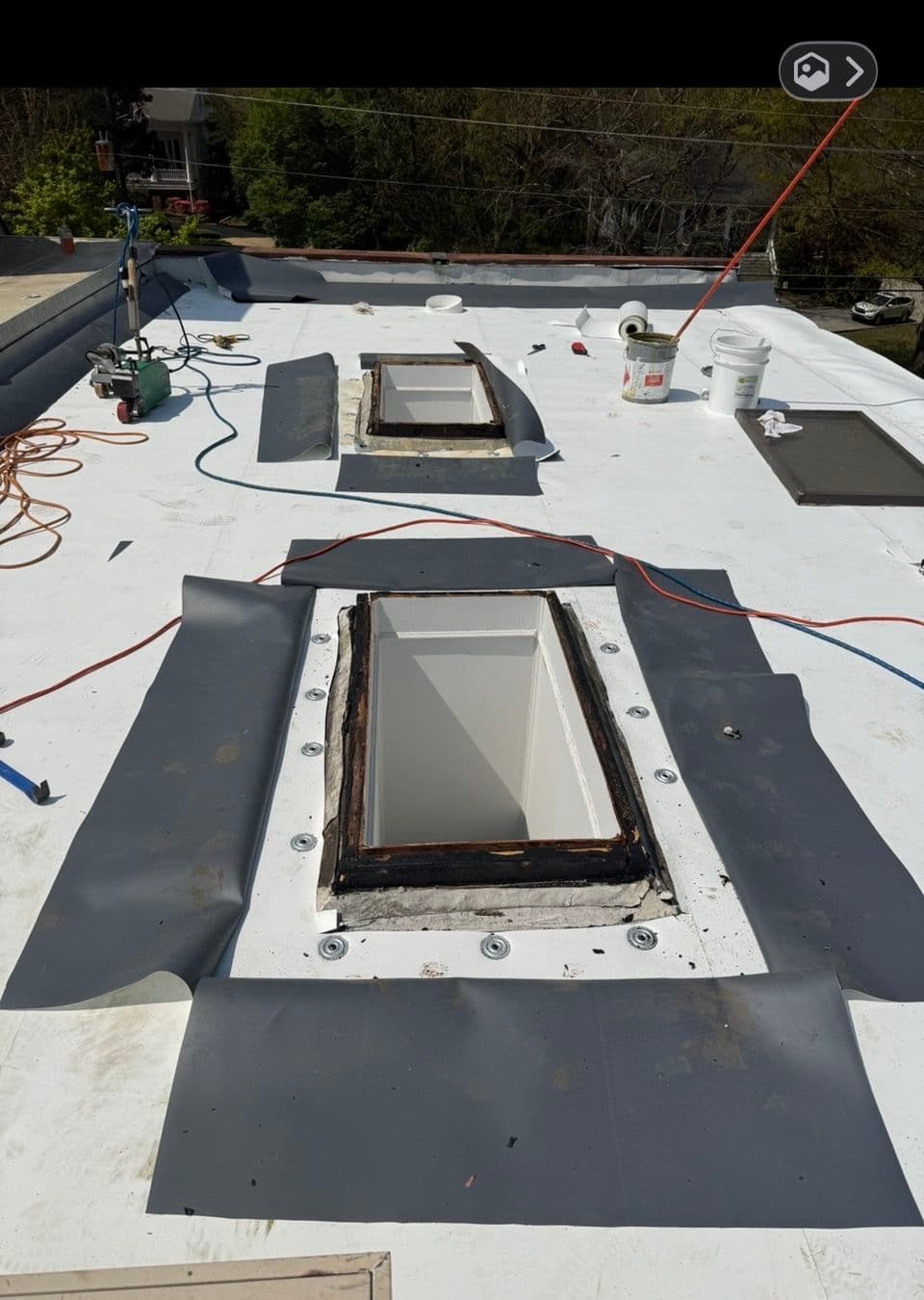
Here's what we were working with - an existing EPDM rubber roof that had seen its share of past repairs and coating applications over the years. That kind of history changes how you approach the next step. You can't just slap something on top and call it a day. The condition of what's underneath matters, and reading that correctly is half the job.
We installed a new TPO roofing system over fan-fold board, mechanically fastened directly over the existing EPDM membrane. Fan-fold board does a couple of things here - it creates a flat, even surface for the new TPO to lay over, and it adds a layer of insulation value in the process. Mechanical fastening means the system is anchored through to the structure, not just sitting on top of old material.
When a roof has had prior coatings and patch repairs, the substrate isn't always clean or stable. That's why the approach we used matters. Going straight to a properly installed TPO overlay - rather than adding yet another coating - gives the building a real, long-term solution instead of just buying a little more time.
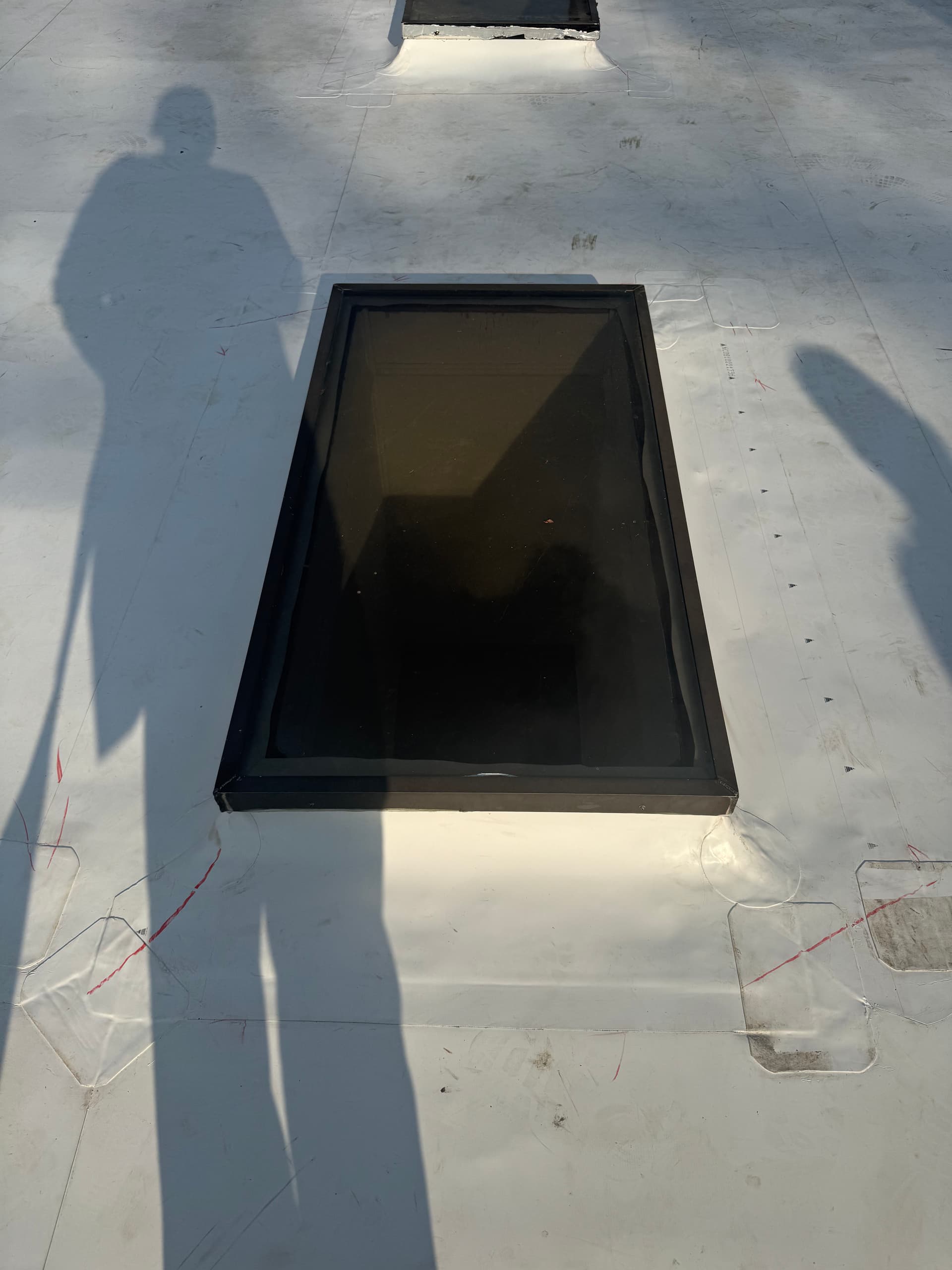
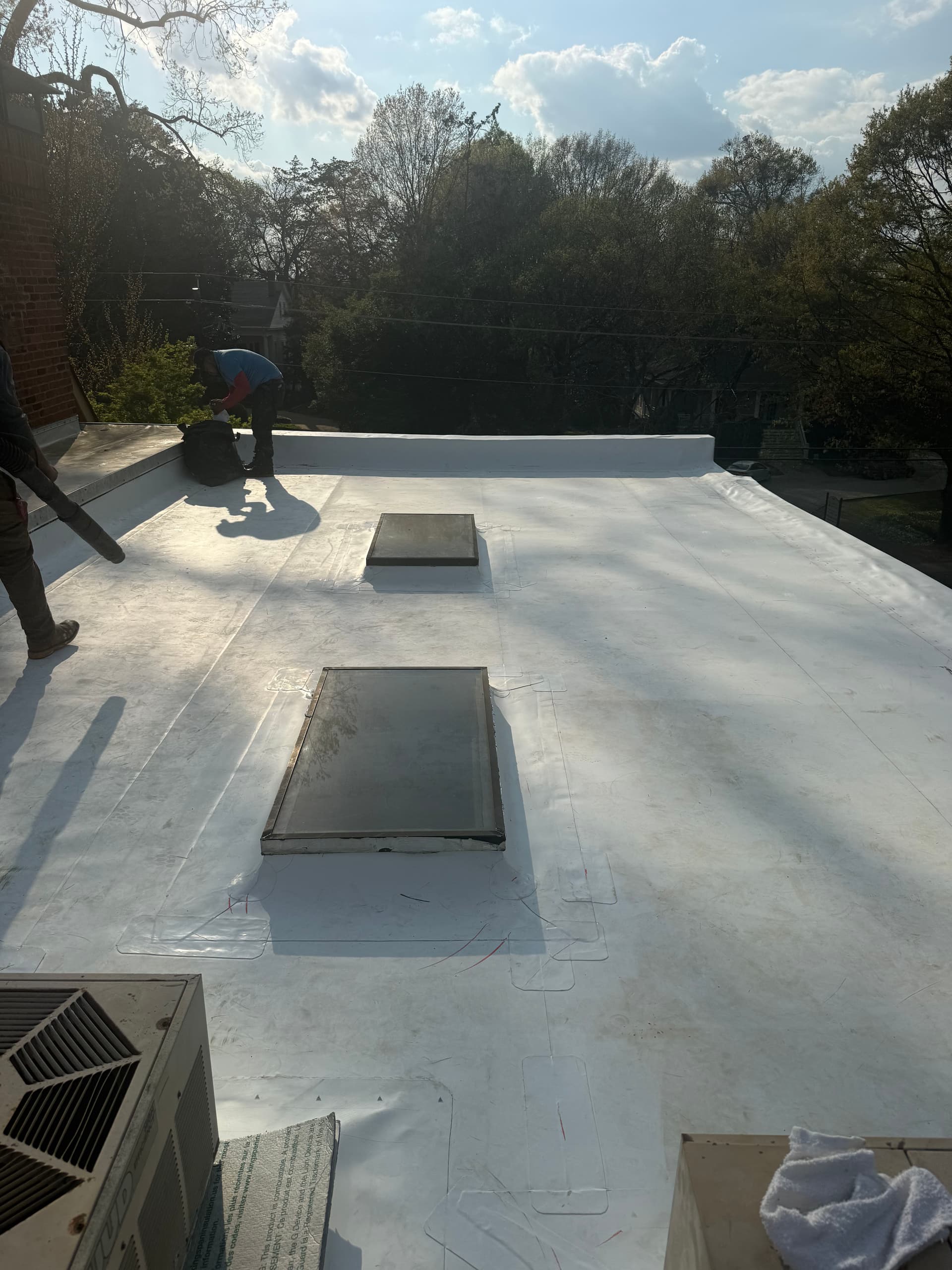
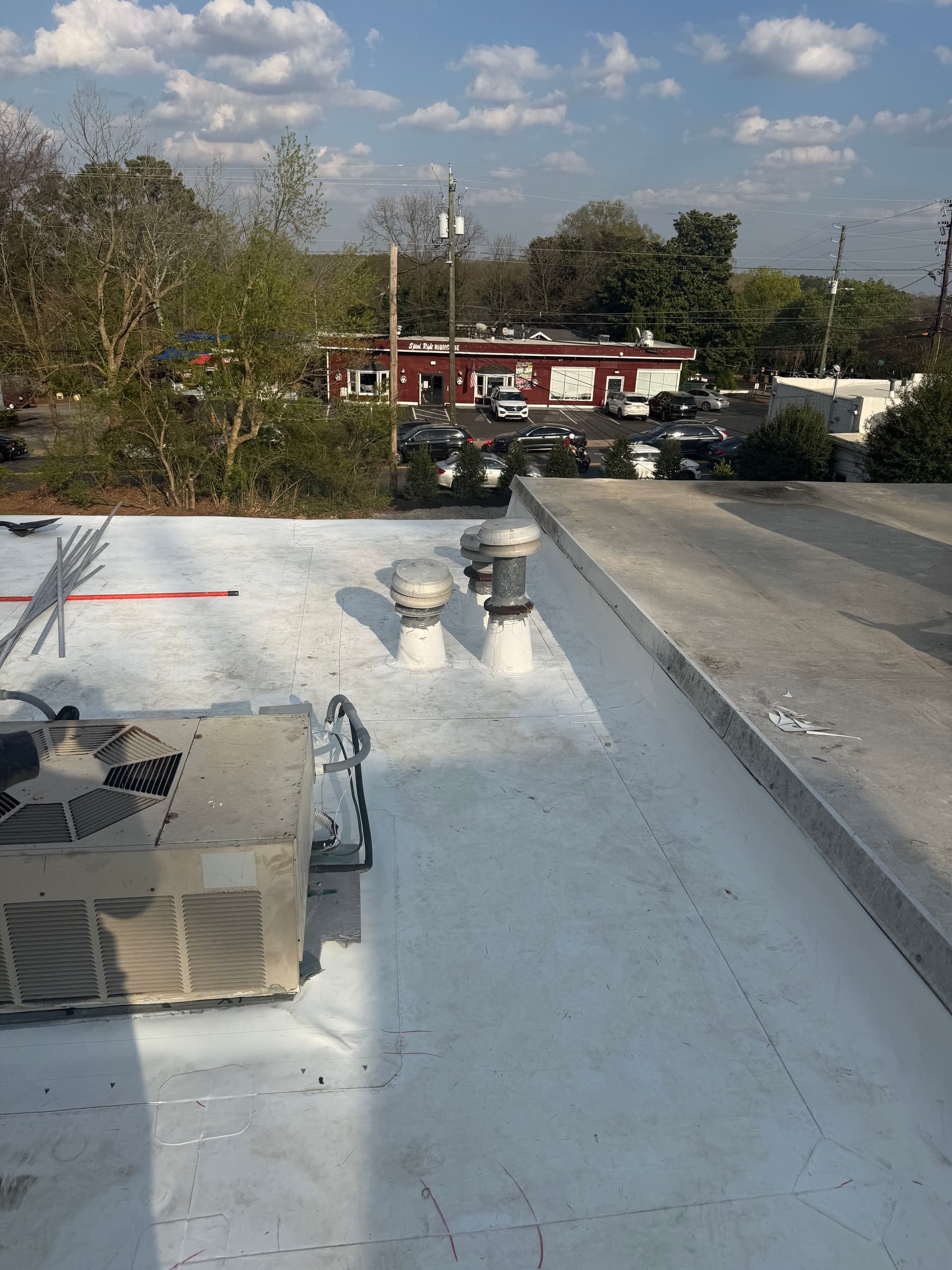
The finished TPO membrane is bright white and heat-welded at the seams, including detailed flashing work around the skylights and penetrations. That's where most flat roofs fail - at the transitions and tie-ins. We take those details seriously on every job, not just the easy, open field areas of the roof.
A roof like this doesn't get done right by accident. It takes knowing what you're looking at before you ever pick up a tool. That's the standard we hold ourselves to on every flat roof we touch in Roswell and the surrounding area.