Why Cracked Parapet Walls Are a Silent Leak Risk on Commercial Roofs
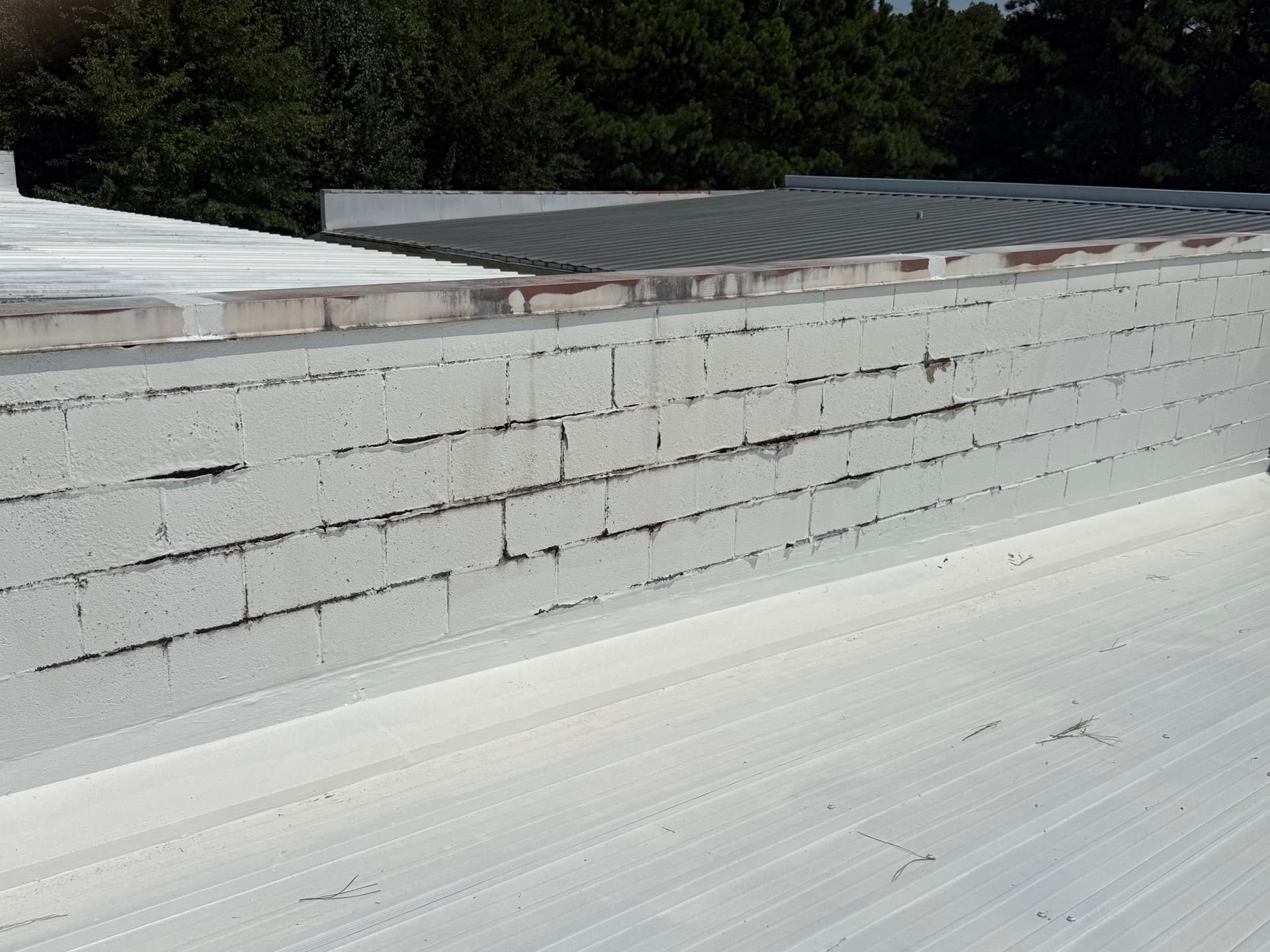
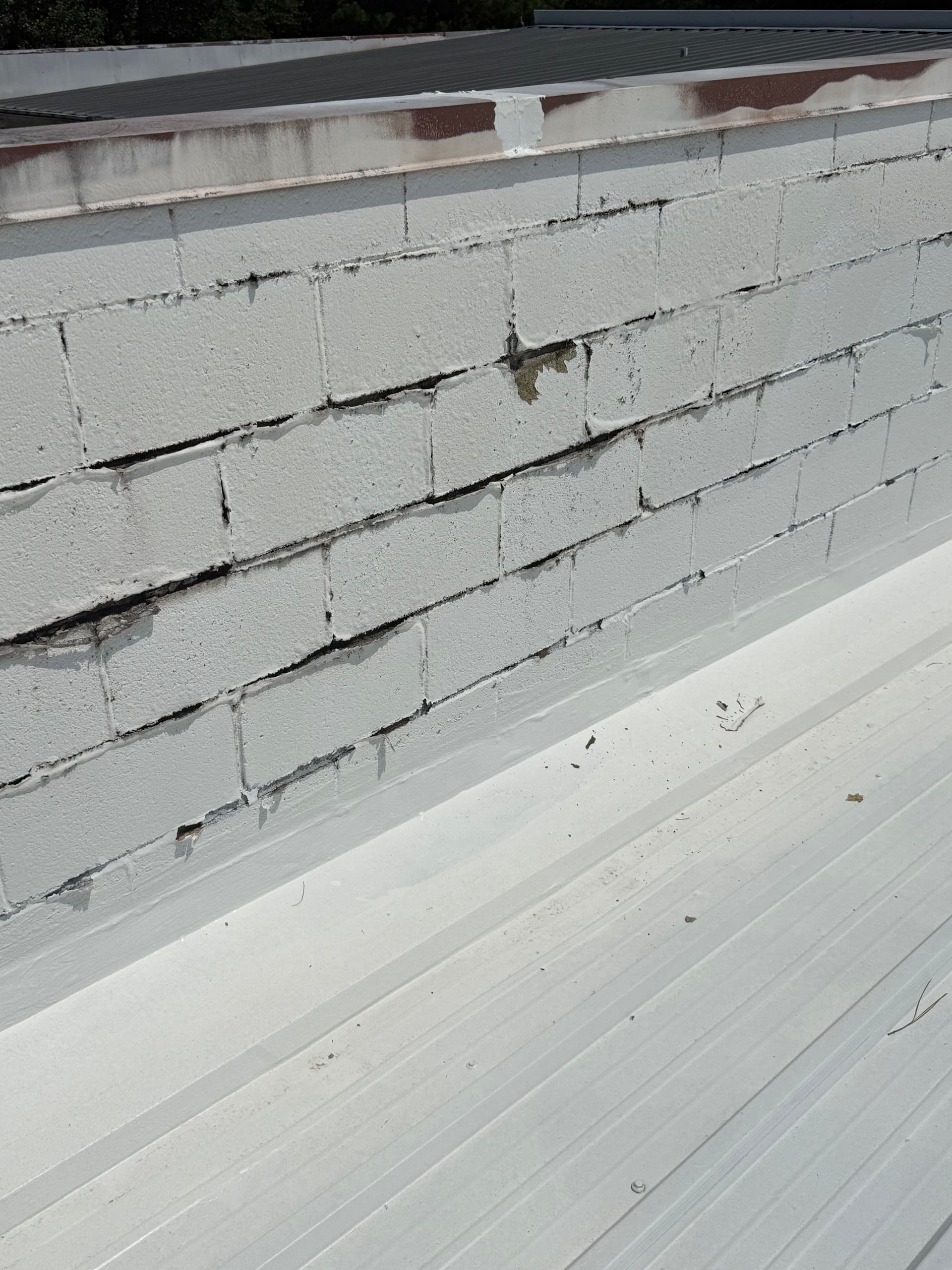
Most commercial roof leaks don't start at the membrane. They start at the walls. Parapet walls - those block or masonry walls that run along the perimeter of a flat roof - are one of the most overlooked entry points for water on any commercial building.
Here's the problem. When the mortar joints between those blocks start to crack and open up, water gets in. It doesn't always show up as a drip inside right away. It works its way through the block, gets trapped, and eventually finds its way into the interior - sometimes weeks after the rain that caused it. By then, you've got water-damaged ceilings, walls, insulation, and a much bigger repair bill than if someone had just caught it early.
What we look for when we're on a commercial roof is exactly this kind of slow-burn problem. Open joints, cracked mortar, gaps where the wall meets the metal roofing system - these are all spots where water can get behind the surface and cause real damage over time. Sealing these areas properly, with the right materials applied the right way, is what keeps a small issue from becoming a costly interior repair.
We work on metal roofing systems and modified bitumen roofs across the Atlanta area, and parapet wall waterproofing is something we take seriously on every job. It's not glamorous work, but it matters. A roof that's sealed right at every penetration, termination, and wall junction is a roof that's actually doing its job.
If you've noticed any water staining inside your building, or you haven't had your commercial roof inspected in a while, those open block joints are worth a close look. Catching it now is always cheaper than dealing with it after water has already gotten in.