Why Tight TPO Seams Make All the Difference in Atlanta
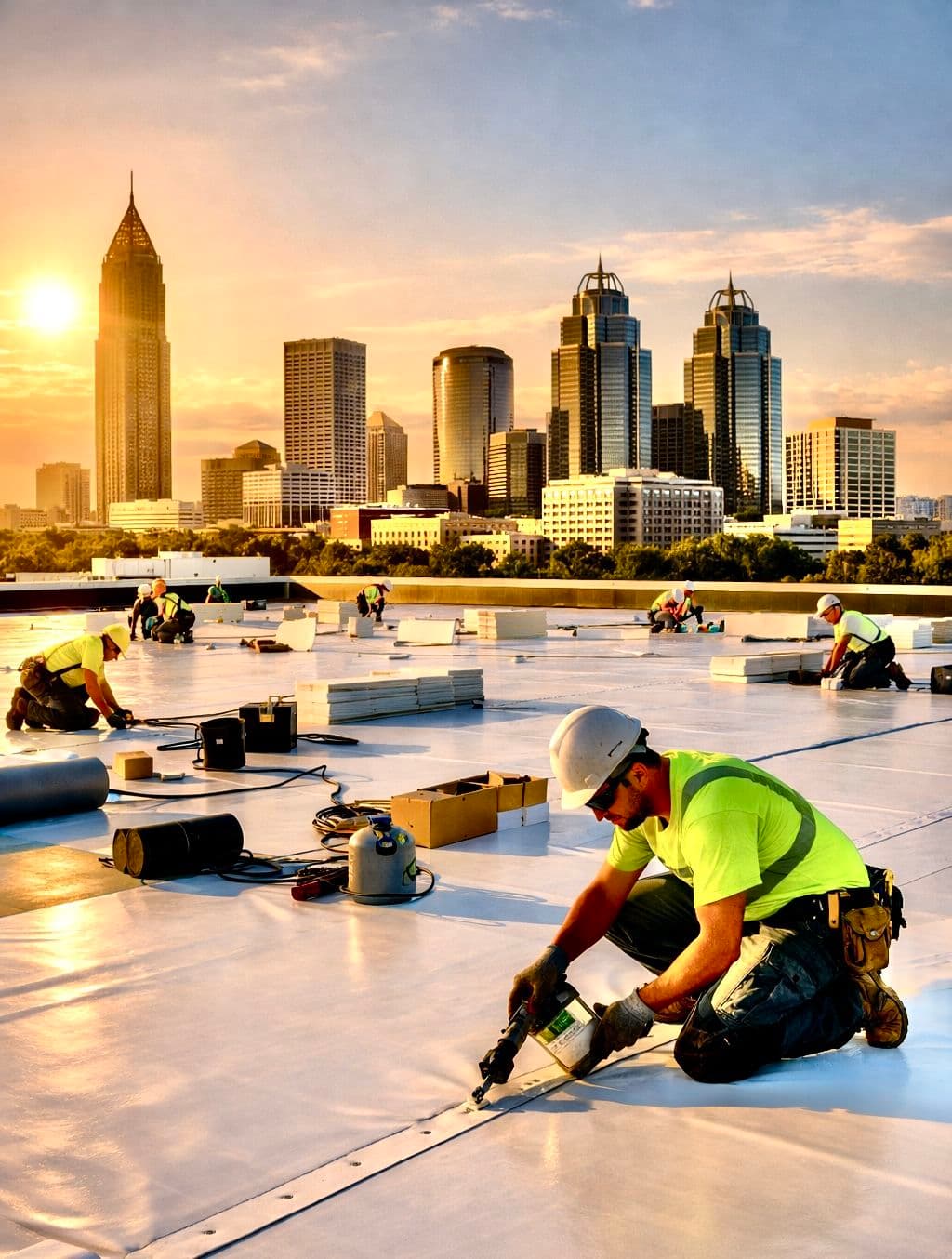
Most roofing failures don't start in the middle of a membrane. They start at the seams. A weld that looks fine from a distance can still have a weak spot - and that's exactly where water finds its way in. It's a small thing that turns into a very expensive problem.
On every 60 mil TPO system we install, we go back and check every single weld after the work is done. Not a quick pass. An actual, methodical inspection of each seam across the entire roof surface. It's one of those extra steps that doesn't show up on a bid sheet but absolutely shows up in how the system performs over time.
Here's why it matters. TPO membranes are only as good as the bonds holding them together. Hot-air welding creates a strong, watertight seam when done right - but heat, speed, and conditions on the roof can all affect the quality of a weld. Catching a weak bond before the roof is buttoned up costs nothing. Catching it after a leak has done its damage is a completely different story.
We do commercial roofing in Atlanta, and flat roofs here deal with a lot - heavy rain, heat, ponding water, all of it. A 60 mil TPO membrane is already a solid choice for durability and reflectivity. Backing that up with tight, verified seams is how you make sure the system actually delivers on what it promises.
That's the standard we hold ourselves to on every job. No seam gets skipped, no shortcut gets taken. Because at the end of the day, a dry building is the only outcome that matters.